
Heavy isn’t normal. Check your flow.
Do you bleed heavily during your period?
Many women and girls accept heavy menstrual bleeding as something they simply have to endure. But heavy isn’t normal, and you deserve answers.
On Menstrual Hygiene Day, the European Haemophilia Consortium is calling for better awareness, earlier diagnosis, and real support for women and girls living with heavy menstrual bleeding.
Let’s clear up some common myths
Myth: “Heavy periods run in families, so it’s normal.”
Fact: Heavy menstrual bleeding may be linked to an inherited bleeding disorder.
Watch our myths and facts video to find out more.
Download your free resources
We have created a set of practical tools to help you understand, assess, and manage heavy menstrual bleeding.
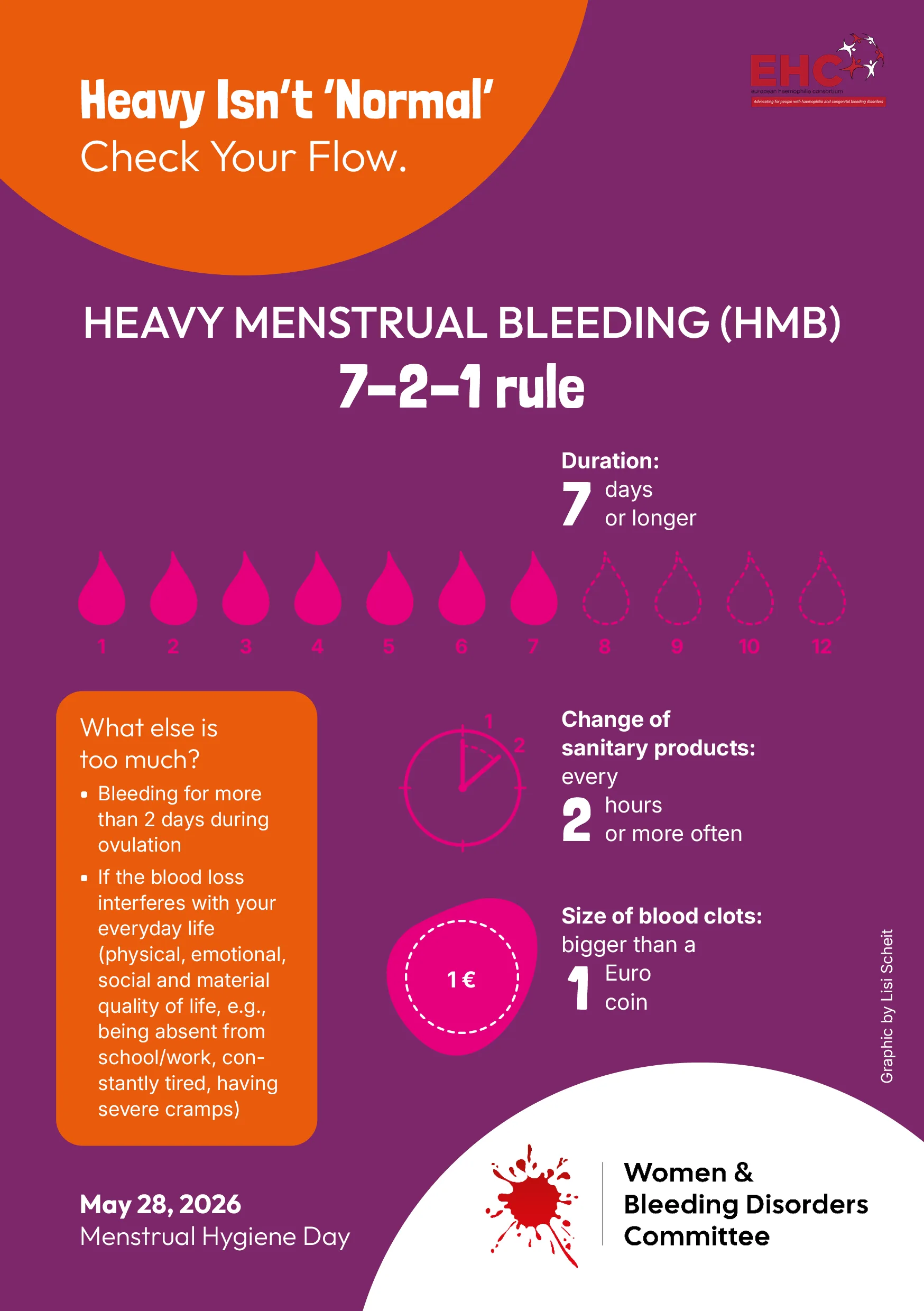
- Infographic: Is your period heavy? A visual guide to the 7–2–1 rule and what normal menstrual bleeding looks like.
- Factsheet: Understanding heavy menstrual bleeding. What counts as heavy bleeding, how it can be treated, and three practical tips for managing it day to day.
Other helpful resources:
- Blood loss assessment chart
- The EHC’s 7-2-1 rule infographics is available in 12 different languages
- European Principles of Care for Women and Girls with Inherited Bleeding Disorders publication
- European Principles of Care for Women and Girls with Inherited Bleeding Disorders video
A message for healthcare professionals
Healthcare professionals have a critical role in closing the diagnostic gap. Incorporating routine menstrual history into clinical assessments, particularly for adolescents and women presenting with heavy menstrual bleeding, can significantly improve detection.
Simple screening tools such as the 7–2–1 rule, combined with targeted questions about personal and family bleeding history, are a practical starting point.
Download the EHC brief for medical professionals for full recommendations.
Heavy isn’t normal. But help is available.
If your period is affecting your daily life, talk to your doctor. You do not have to manage this alone.