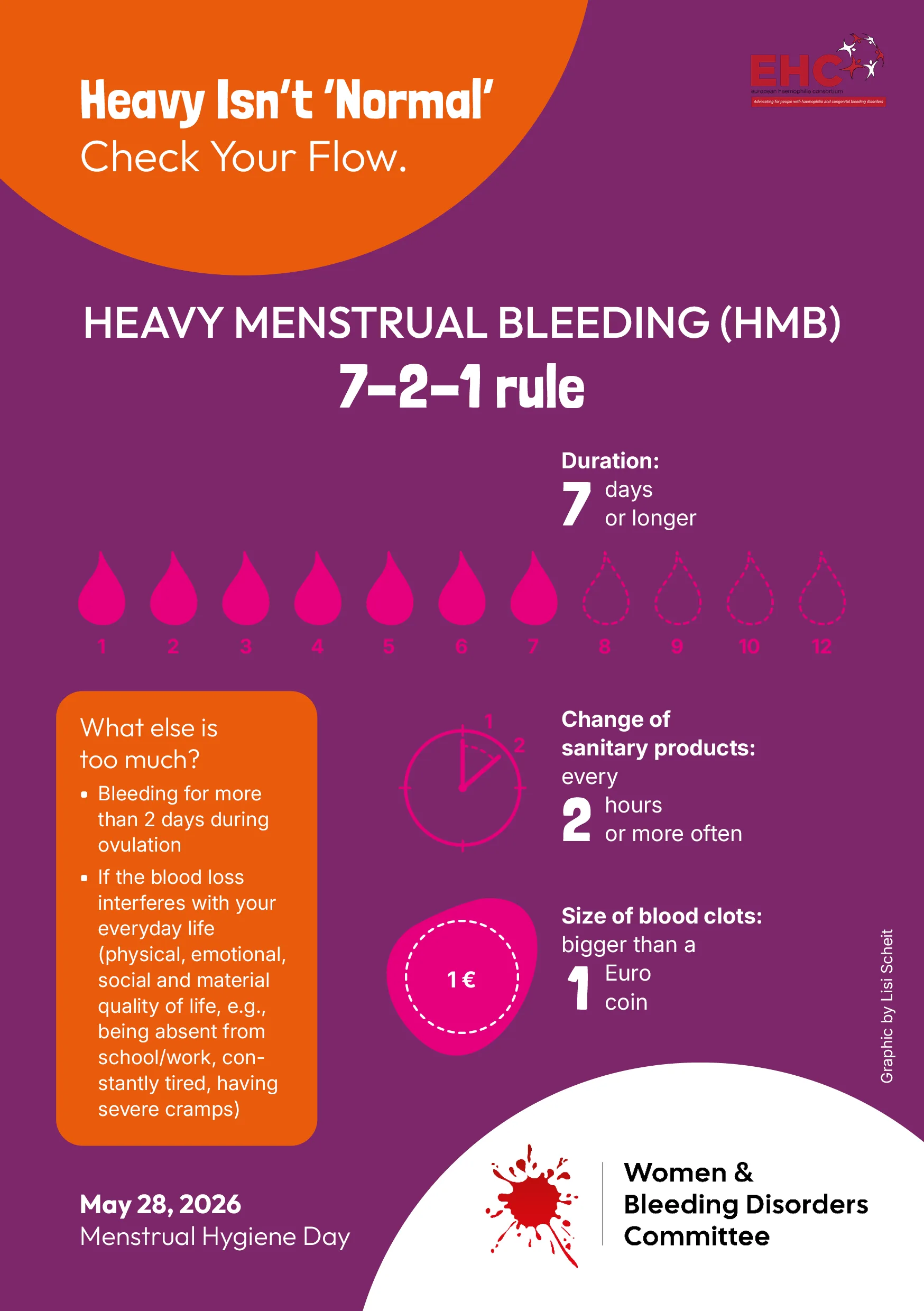
Many women and girls accept heavy menstrual bleeding as something they simply have to endure. But heavy isn’t normal, and you deserve answers.
On Menstrual Hygiene Day, the European Haemophilia Consortium is calling for better awareness, earlier diagnosis, and real support for women and girls living with heavy menstrual bleeding.
Let’s clear up some common myths
Myth: “Heavy periods run in families, so it’s normal.”
Fact: Heavy menstrual bleeding may be linked to an inherited bleeding disorder.
European Principles of Care for Women and Girls with Inherited Bleeding Disorders publication
European Principles of Care for Women and Girls with Inherited Bleeding Disorders video
A message for healthcare professionals
Healthcare professionals have a critical role in closing the diagnostic gap. Incorporating routine menstrual history into clinical assessments, particularly for adolescents and women presenting with heavy menstrual bleeding, can significantly improve detection.
Simple screening tools such as the 7–2–1 rule, combined with targeted questions about personal and family bleeding history, are a practical starting point.